
Repair and Replacement Decisions
Do
- Call now about the appliance that's failing.
- Share its approximate age and previous repair history.
- Compare the repair with delivery, installation and removal.
- Ask whether suitable replacement parts are still made.
Don’t
- Replace an appliance based on age alone.
- Ignore repeated faults or a rusted-through washer tub.
- Order a built-in replacement without checking its fit.
- Put an old refrigerator in ordinary household trash.
The Fault and Condition Shape Your Decision
Repair usually deserves consideration when one replaceable part has failed and the rest of the appliance is sound. Replacement becomes more practical when major damage, repeated failures or unavailable parts undermine the repair. Your technician's diagnosis separates those situations; a symptom or the appliance's age cannot settle the decision on its own.
Refrigerator and Freezer Condition
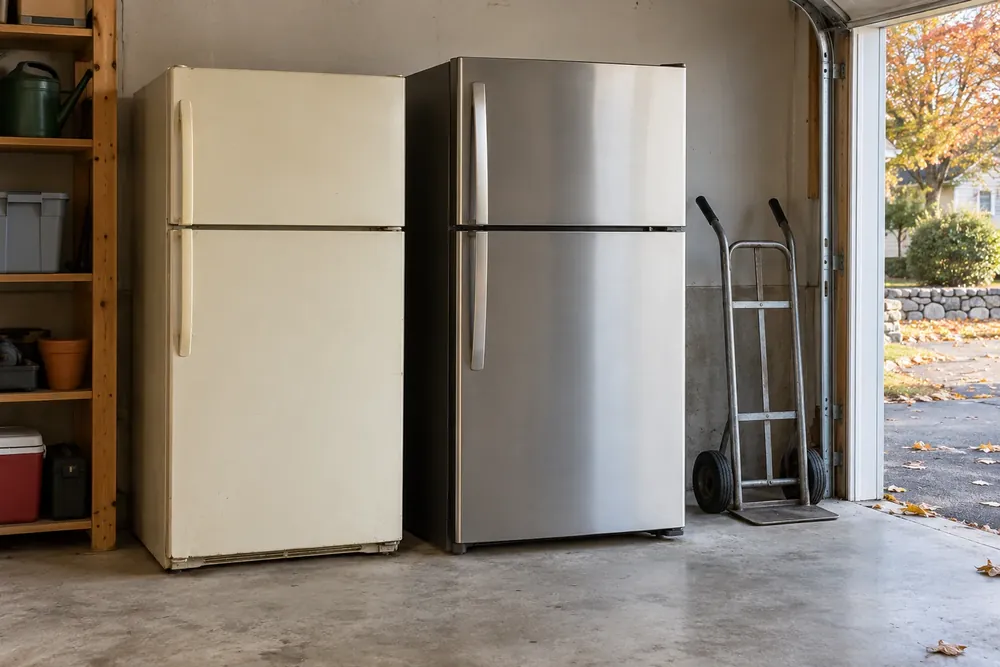
A refrigerator repair-or-replace decision depends on the cooling fault and the condition of the cabinet, doors and other working components. A fan, sensor or seal problem on an otherwise sound unit may favor repair. A sealed-system failure on an old fridge, particularly alongside recurring faults, can favor replacement. Freezers need the same distinction between an isolated problem and wider deterioration.
The choice to repair or replace a refrigerator also includes fitting a replacement into the kitchen. A built-in unit may be costly to swap because the opening, door panels and installation must match. Replacing a freestanding machine involves its own delivery route, connections and removal arrangements.
- Do: Call now and describe the cooling problem and past repairs.
- Don't: Treat a warm compartment as proof of compressor failure.
Washers and Dryers
Whether to repair or replace a washing machine turns on the failed part and the machine's overall condition. A newer washer with one faulty pump or door lock may be a sensible repair candidate. A rusted-through tub, extensive mechanical wear or repeated major failures can make replacement more practical. The diagnosis should establish whether the current fault is isolated.
Dryers with a sound drum and cabinet may be worth repairing when one component fails. Recurring motor or control faults need a broader comparison. Stacked laundry equipment introduces another consideration: a replacement must be compatible with the remaining machine and its approved stacking arrangement.
- Do: Compare a repair with the full installed replacement.
- Don't: Assume any new dryer fits your existing stack.
Dishwashers, Ranges and Cooktops
For a dishwasher, repair or replace decisions depend on leaks, corrosion and the washing system's condition. A replaceable latch or pump on a sound machine may justify repair. A damaged tub or several recurring faults may favor replacement. Cabinet access and the cost of fitting a new machine also matter.
Ovens and cooktops can remain repair candidates when one heating or control component fails. Extensive damage or unavailable parts changes the comparison. Built-in ovens and fitted cooktops need careful matching to the cabinet opening, so the replacement plan includes fitting as well as the appliance.
- Do: Share recurring leaks or heating faults with your technician.
- Don't: Commit to a replacement solely because the current appliance stopped.
Microwave Repair Decisions
Microwaves can be repaired when a suitable part resolves the fault and the remaining appliance is in sound condition. A built-in or over-the-range installation may make repair more attractive because replacement includes removal and refitting. For a countertop model, extensive damage or several failed components can weigh more strongly toward replacement. Internal inspection belongs with your technician.
- Do: Stop using a microwave that sparks or has door damage.
- Don't: Open its case or bypass a door latch.
Appliance Comparisons
The table compares isolated faults with the broader problems that can favor replacement.
| Appliance | Repair usually makes sense when | Replacing usually makes sense when |
|---|---|---|
| Refrigerator or freezer | One replaceable component failed; cabinet and cooling system are otherwise sound | An old unit has a major sealed-system failure or recurring faults |
| Washer | A pump or lock failed on a sound machine | The tub is rusted through or major failures keep recurring |
| Dryer | One component failed; drum and cabinet remain sound | Several major components are failing or parts are discontinued |
| Dishwasher | A latch or pump failed without wider damage | The tub is damaged or repeated leaks and faults continue |
| Oven or cooktop | A suitable part resolves an isolated heating or control fault | Extensive damage or unavailable parts prevents a practical repair |
| Microwave | One repairable fault affects an otherwise sound fitted unit | Serious damage or several faults outweigh repair and refitting |
Age and Expected Service Life
Expected service life provides context rather than a replacement deadline. Virginia Cooperative Extension's appliance factsheet, published February 25, 2020, says a refrigerator may operate effectively for 15–20 years and a dishwasher for about 10 years. Those figures don't predict the remaining life of your model. Condition, use and repair history still matter.
- Do: Include operating costs and installation in your comparison.
- Don't: Use a published lifespan as an automatic cutoff.
Disposal After Replacement in Leominster
Massachusetts bans large appliances, or white goods, from disposal or transfer for disposal under MassDEP's waste disposal bans. Leominster's AKS Recycling and Transfer Station page lists appliance recycling options at the station in Fitchburg, with separate handling requirements for refrigerators and other refrigerant-containing items.
Disposal planning belongs in the replacement decision. One of our local appliance repair partners will discuss the repair scope and charges before you authorize work, giving you a basis for comparison with replacement and removal.
- Do: Arrange appliance recycling when planning a replacement.
- Don't: Leave an unwanted fridge with ordinary household rubbish.