
The Repair Bill Basics
Do
- Call now and describe the appliance's symptoms.
- Share the model number if it's already handy.
- Ask which charges apply to diagnosis and repair.
- Agree to the work and parts being ordered.
Don’t
- Buy replacement parts based only on an error code.
- Pay for a part you never agreed to.
- Treat a diagnosis charge as the entire repair bill.
- Pull apart an appliance to identify the fault.
The Factors Behind an Appliance Repair Bill
An appliance repair bill reflects diagnosis, the failed component, labor and access to the machine. A symptom alone doesn't identify all of that work: a washer that won't drain might have an obstruction, a failed pump or a control problem. A page cannot give a reliable total for your appliance without an inspection and a defined repair.
Diagnosis and Agreed Work
Diagnosis identifies the fault and establishes what needs repairing. Your technician discusses when the problem happens, checks the appliance's operation and tests the relevant components. An error code helps direct testing, but it isn't proof that a particular part needs replacing. The resulting scope should distinguish the diagnosis charge, parts, labor and any return visit.
Whirlpool's service booking page explains that model and serial numbers help identify the appliance and the parts and tools needed. You can call without those details; share what you already know during the conversation. One of our local appliance repair partners will explain the proposed repair and its charges so you can decide before work begins.
- Do: Call now and describe when the appliance stops working.
- Don't: Delay the call to search for a model label.
- Do: Give the model number if you have it.
- Don't: Pay for a part you haven't agreed to.
Refrigerator, Freezer and Ice Maker Repairs
Refrigerator repair cost changes substantially with the system involved. A door seal, fan or temperature sensor presents a different job from a compressor or another sealed cooling component. Freezers have similar distinctions, with cabinet condition and frost problems also affecting the diagnosis. An ice maker fault might involve its assembly, water supply or the refrigerator's cooling performance.
Built-in refrigeration can take longer to reach than a freestanding unit. Moving the appliance, protecting surrounding finishes and reaching the failed component all contribute to labor. A symptom such as melting ice doesn't establish which component failed.
Washing Machine Repairs
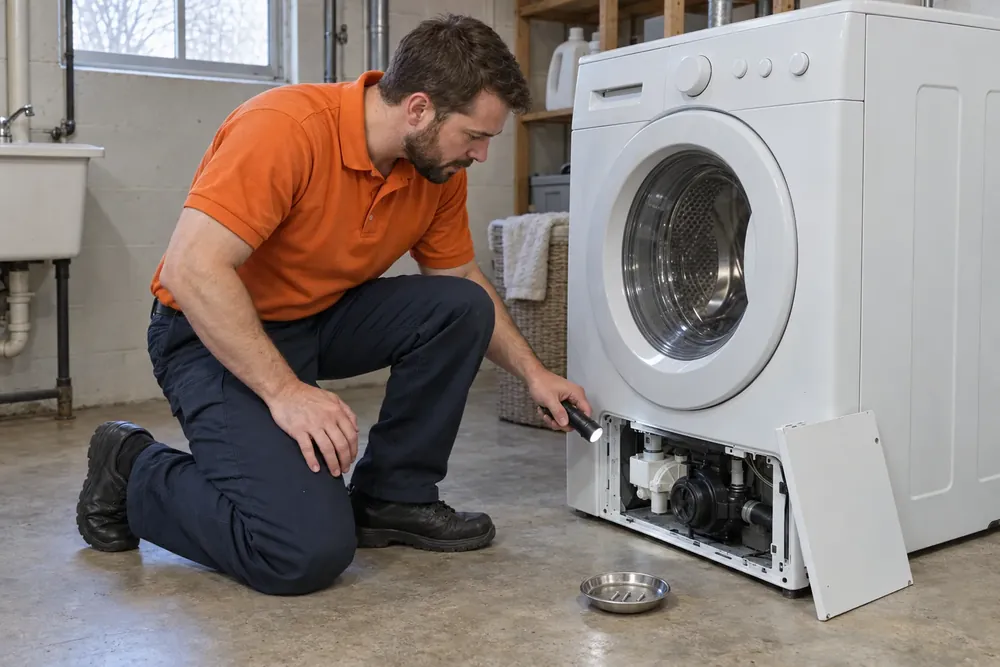
Washing machine repair cost depends on whether the fault involves draining, filling, locking, spinning or controlling a cycle. A drain pump replacement differs from work involving bearings or a damaged tub. Washer repair cost also reflects the machine's layout: stacked laundry units and tight closets can require additional access work.
The model's age and brand affect which replacement parts fit. An older machine might need a discontinued component, while a high-end model might use a specialized assembly. A part that looks similar isn't necessarily suitable.
- Do: Mention stacking, leaks and unusual noises during the call.
- Don't: Move a heavy washer to expose its parts.
Dryer Repairs
Dryer repair service cost depends on both the fault and the appliance's design. Electric heating components and gas ignition components require different diagnosis and repair work. A dryer repair price should identify the actual component involved; a drum that turns without heat doesn't establish that the heating element failed.
Clothes dryer repair cost may also involve access to the machine and checks of its airflow. Restricted exhaust can affect drying performance even when the heat source works. Dryer repair cost and any separate vent work need clear scopes so you understand what each charge covers.
- Do: Describe whether the drum turns and clothes remain damp.
- Don't: Order a heating element based on that symptom alone.
Dishwashers, Ovens and Microwaves
Dishwasher repair cost varies with the affected seal, drain pump, circulation system or controls. Access beneath a fitted counter can add labor. Oven and cooktop repairs differ between gas and electric models, and a wall oven may need more access work than a freestanding range.
A microwave's installation matters too. An over-the-range or built-in unit can require removal and refitting, while a countertop model has a different access arrangement. Internal diagnosis belongs with your technician; opening the case isn't a homeowner check.
- Do: Turn a malfunctioning oven off at its control.
- Don't: Open a microwave's outer case to inspect components.
Parts, Return Visits and Timing
Parts availability and appointment timing can change the work involved. A stocked part and a component that must be ordered create different repair plans. An ordered part can require a second visit, with additional travel or labor charges depending on the agreed terms. After-hours appointments can also have different charges.
Age alone doesn't determine the bill. A newer machine with a major fault may require more work than an older appliance with one replaceable component. The useful comparison is the diagnosed repair against replacement, including installation and removal; the repair-or-replace page covers those factors.
- Do: Ask how ordered parts and return visits are charged.
- Don't: Assume after-hours work has the same pricing terms.